Lessons learned from 50 days of problem hunting !
Lessons learned from 50 days of problem hunting !🎯
More than 50 days have passed since I explored and validated problems. Based on my reflections on the challenge, here are my key takeaways.
Hypothesis testing insights
Talk to your customers! (It’s hard, but just do it!)
Talking to customers during problem validation is essential, but it’s hard. Finding people, scheduling conversations, and conducting meaningful interviews takes time and energy. However, I realized that the insights gained were invaluable, so I made a conscious effort to speak with as many people as possible. Hearing real stories either reinforces or challenges your assumptions, making it worth the effort.

Surveys: Useful, but a Double-Edged Sword
- Designing the Right Survey is Challenging: Avoiding bias in your questions while framing them simply and concisely requires great expertise.
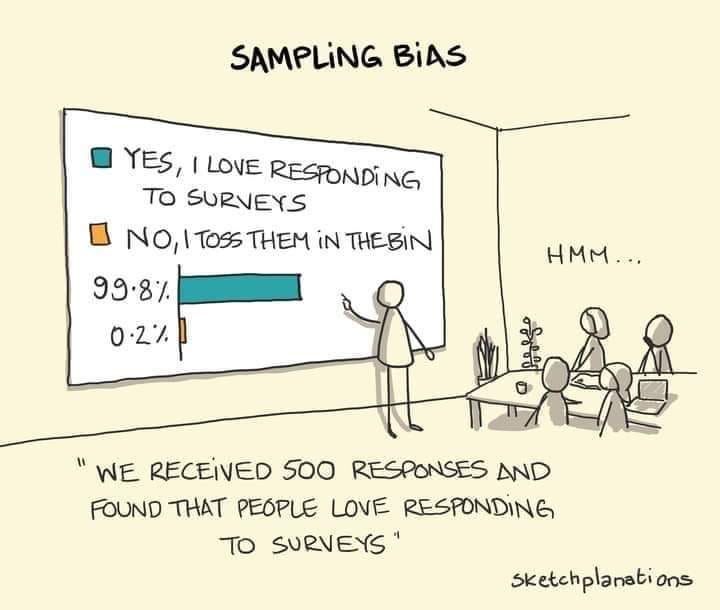
- Getting Responses is Tough: Without the right incentives or channels, gathering even 50 responses can feel impossible.
- Data Quality Can Decline at Scale: When surveys hit the 100+ mark, spam and irrelevant responses dilute the insights. Cleaning free-text data feels like mining for gold in a river, but LLMs do come in handy 😊.
Market Research is an Uphill Battle
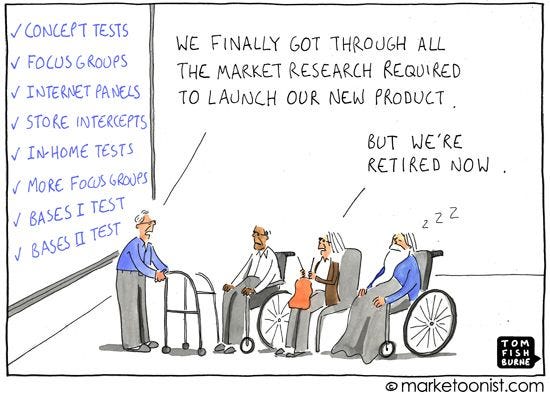
Finding reliable and trustworthy data online is surprisingly difficult. Many reports are irrelevant, promotional, or hidden behind exorbitant paywalls (think $10,000 per report! which “may” be useful for your problem). Since some data isn’t publicly accessible, it’s nearly impossible to dig deeper into the problem space.
Visual Data Wins
I found that simpler visuals like pie or waterfall charts communicate insights faster than complex bar graphs. Also based on my observation, Multiple-choice questions (MCQs) outperform free text or gradients for clean data collection. Free text combined with NLP tools can reveal deeper insights, but quick wins come from easier-to-parse formats.

Templates Are Time-Savers
Repeating the same steps for each problem validation? Templates are your best friend. They help you stay consistent, avoid missing details, and move quickly. It doesn’t matter if it’s a custom framework or a canvas, templates streamline the process, which led me to build my own template 🙂.
Overall insights
Customer Segmentation is Crucial
Identifying your customer and end-user is foundational. I stumbled upon cases where they are different people, and bifurcating these roles helped me identify the segments. Customers, usually, hold the purchasing power, while end-users experience the problem directly. For example, parents are the customers who buy products for their children who are the end-users, pet parents and pets, etc. Understanding both perspectives ensures you address the right pain points and deliver real value.
Some Data is Nearly Impossible to Access
Sensitive data, like retail customer information or HR insights, is tough to obtain — even with good intentions. Businesses are understandably cautious about sharing, making these areas challenging to explore without alternative strategies.

“There Is No Such Thing as a New Idea” — Mark Twain
I have realized and convinced myself that chances are, your idea — or a similar one — has already been tried. This isn’t a setback; it’s an opportunity. Learn from previous failures to understand why they didn’t work and how you can approach the problem differently for success. Its also important to understand that execution is king in the current market compared to unique ideas.

Personal Experience Fuels Better Problem-Solving
Based on what I’ve observed and experienced, firsthand experience with a problem gives a significant edge in solving it to its full potential. When I tackle something that “scratches my own itch,” I find it easier to empathize with the target audience instantly and craft a solution that truly resonates. However, when I’m driven by external motivations to solve a problem without a direct connection, it can be more challenging to approach it intentionally — though not impossible with sufficient effort and insight.
Owner’s Mindset is Everything
I realized that during the problem exploration phase, there’s a significant responsibility to accurately identify a problem’s value and importance. Failing to do so can result in wasted time, resources, and potential failure. Taking ownership fosters a more thorough and thoughtful approach.
Follow the Data
Surveys, interviews, and research tell a story — if you listen. Hidden in the data are patterns and opportunities that can guide you toward meaningful, actionable solutions. Like “follow the money,” in problem validation, it’s all about following the data.
Final Thoughts
This challenge taught me that validating problems is messy, but perseverance and structure are the keys to uncovering meaningful insights. Whether it’s through customer interviews, surveys, or market research, every step adds clarity to your entrepreneurial journey. I resonate with the importance of intentionality, empathy, and resilience in problem validation. Whether it’s refining customer segmentation or learning from past failures, every step sharpens your ability to tackle challenges effectively.
On a personal note, crafting a concise 5-minute Medium post was unexpectedly draining — it required effort, focus, and energy. Yet, this process gave me a newfound respect for startups that avoid failure by thoroughly researching the problem, recognizing misalignment, and pivoting when necessary. It vital to avoid such obstacles and failures for a meaningful and successful startup journey!
By the end, I had essentially created a pitch deck for each problem — not with solutions, but with a focus on the problem’s impact and the “why” behind it. This shift in mindset has been transformative. I now approach challenges by prioritizing the why before the how, paving the way for more thoughtful and impactful solutions.
Thank you joining me in this journey, there is more to come 😄!
Links to read my problem validations:
- Problem 1: Competitive Over-the-board (OTB) chess players lose valuable time adjusting pieces during time scrambles in rated games on a traditional board.
- Problem 2: People counting systems in public spaces often use manual, repetitive tasks that reduce employee productivity, increase fatigue, and compromise the accuracy of foot traffic data.
- Problem 3: Delayed and unreliable power supplies in disaster-affected regions disrupt disaster management efforts, healthcare services, and communications and threaten individuals’ livelihoods.
- Problem 4: Banking apps fail to proactively guide users with poor financial literacy toward better spending and credit habits, leading to financial vulnerability.
- Problem 5: Perishable grocery is wasted at home by working individuals due to unawareness or apathy leading to redundant purchases, expired items, and financial strain.