50 days of problem hunting ! Problem 3
50 days of problem hunting !🎯Problem 3
Delayed and unreliable power supplies in disaster-affected regions disrupt disaster management efforts, healthcare services, and communications and threaten individuals’ livelihoods.
Aim of this activity is to, identify a problem I faced, research about it, and validate the problem. I will solve the problem, only if it is a “Real Problem”.
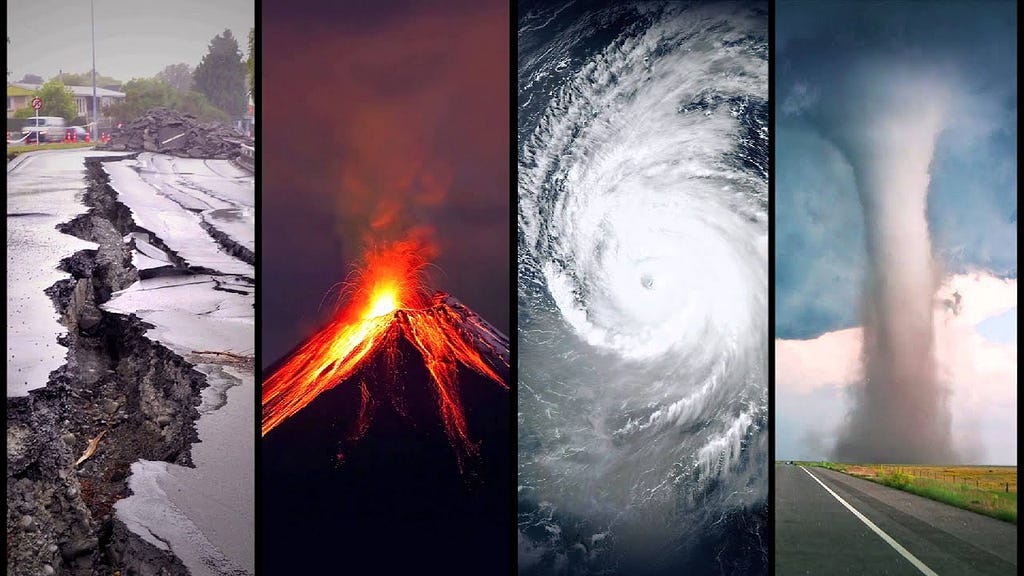
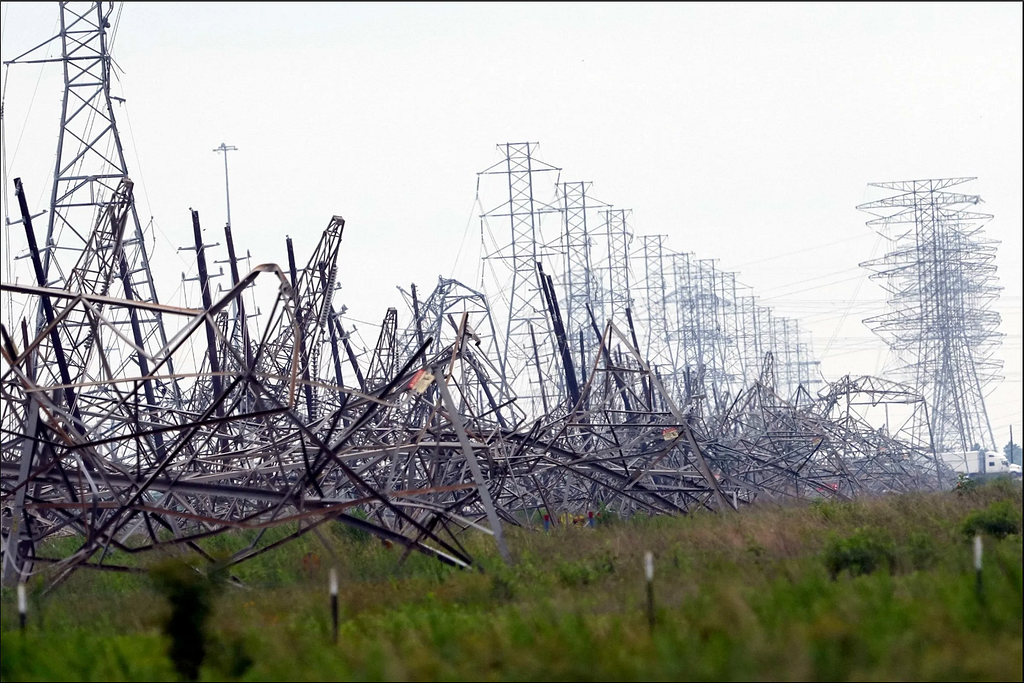
Source: Weather-related power outages are getting worse
Problem Exploration
Context: The problem occurs for people located in disaster (natural and human-made) prone areas.
Background: Climate change and geopolitical conflicts are driving an increase in both the frequency and intensity of extreme weather events and wars. These conditions place immense pressure on aging energy infrastructure, making power outages a growing global concern.
The electrical grid, designed for nominal conditions, is highly vulnerable to modern climate extremes, with above-ground grid infrastructure prone to severe weather and underground grid lines at risk from flooding. Power outages cost billions annually, disrupting access to essentials like water, food, healthcare, communication, and transportation, while compounding humanitarian and infrastructure challenges.
User backstory story (hypothetical): Mark, a resident of a disaster-prone region, anxiously awaits the restoration of power to access clean water, food, and medical care for his loved ones. The prolonged outage has crippled essential services, leaving his city in chaos and putting survival at risk.
What will happen if the problem is unresolved:
- Delayed power results in loss of life during disaster management.
- Capital intensive work to rebuild parts of the grid for every disaster across the world.
- Restoration workers and the grid is at a saftey risk while repairng the system.
Ideal Client Profile: Disaster Relief Organizations, Remote/Off-Grid Communities, and Government agencies. They can be reached through humanitarian summits, government networks, and online campaigns.
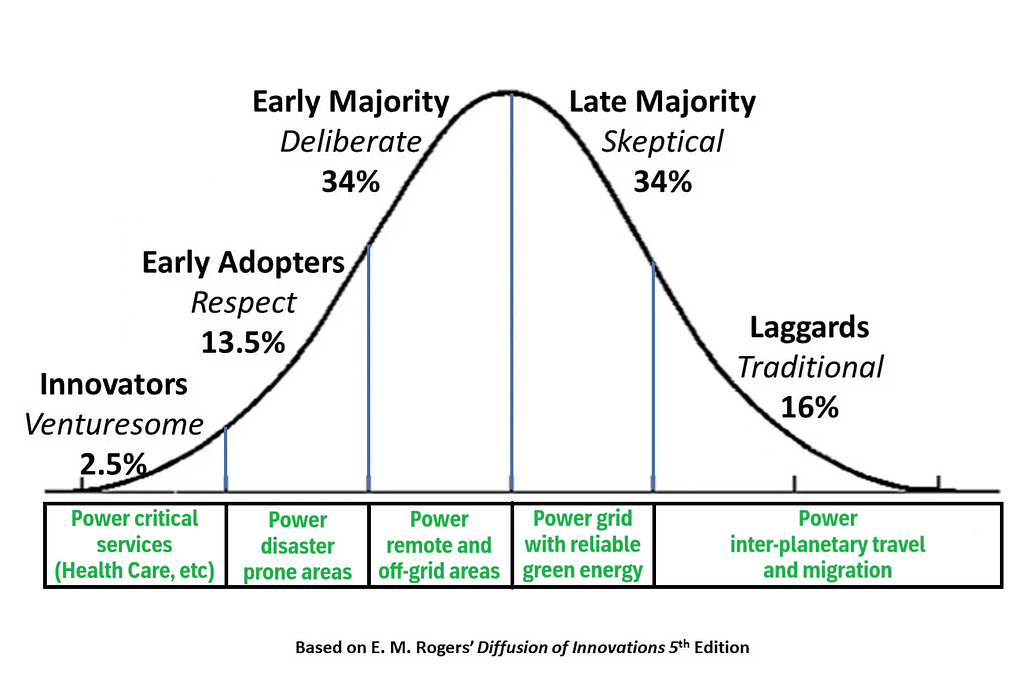
Probable Adoption curve (hypothesis):
Impact:
Large-scale outages disrupt the foundations of modern society. It severely affects critical sectors like healthcare, emergency response, water and food supply, and defense. A lack of refrigeration, heating, and air conditioning during extended outages can pose serious health risks, particularly for individuals reliant on medical equipment, older adults, and those with disabilities. These impacts are often exacerbated by concurrent disasters such as floods, wildfires, or extreme temperatures.
The economic toll is substantial, with severe weather-related outages costing an estimated $18–$33 billion annually. For instance, weather-related outages in 2008, the year of Hurricane Ike, inflicted economic losses of $40–$75 billion. As climate change intensifies extreme weather events, these costs are expected to rise further.
Power restoration can take weeks or even months, with extreme cases like Hurricane Maria taking over 11 months. The majority of the effort goes into checking generation plants for safety, repairing the transmission systems, and restoring the distribution endpoints. These efforts are prioritized for critical infrastructures and services before reaching the common man. We can conclude that each delayed hour in restoring power is a dire risk of losing life.
Power restoration demands vast manpower and collaboration between utility companies. A quick recovery requires logistical expertise, skilled workers, and specialized equipment, leading utilities to form mutual assistance alliances during disasters. For example, Hurricane Irene required nearly 50,000 workers, while Hurricane Katrina saw over 46,000 workers involved in power restoration. Additionally, workers repairing power lines face significant safety risks to restore electricity to residents, especially during calamities.
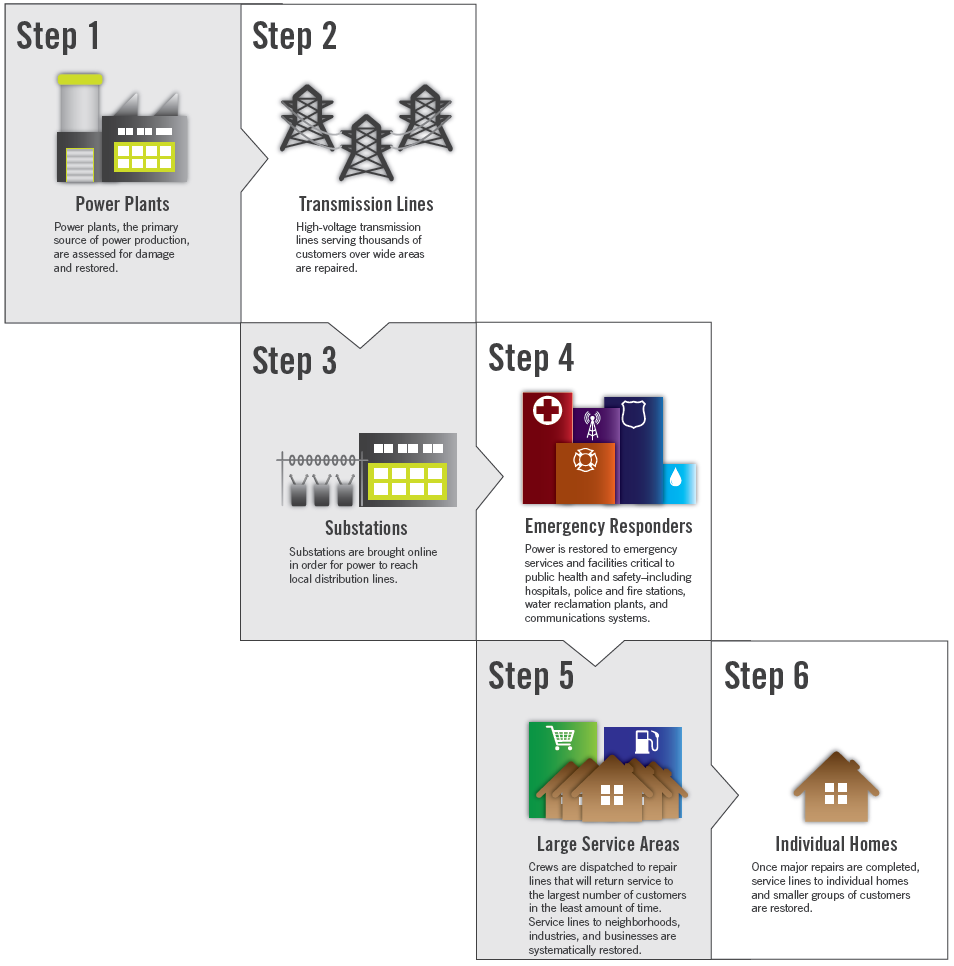
Source: Storm restormation process
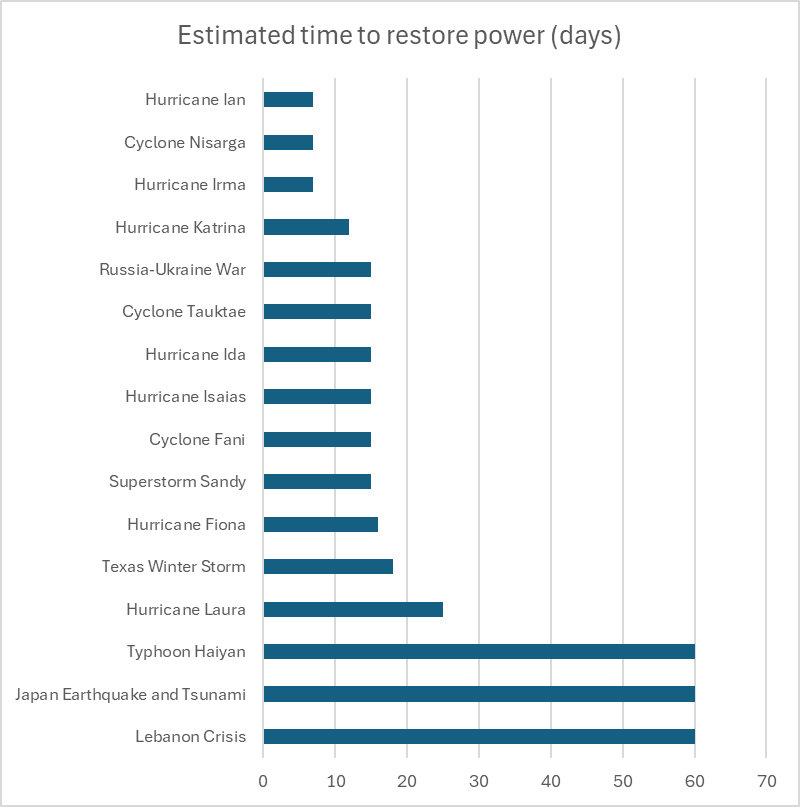
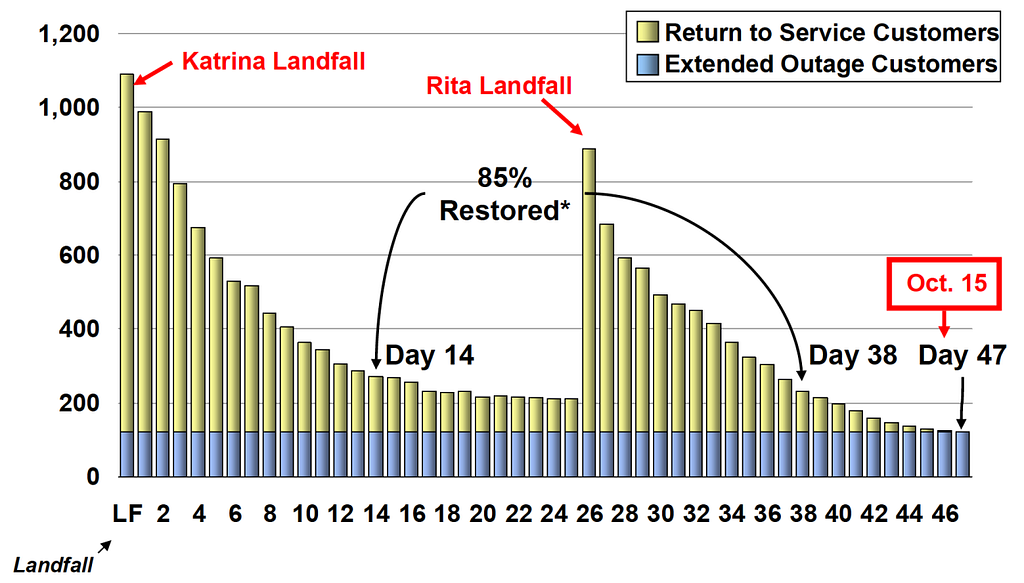
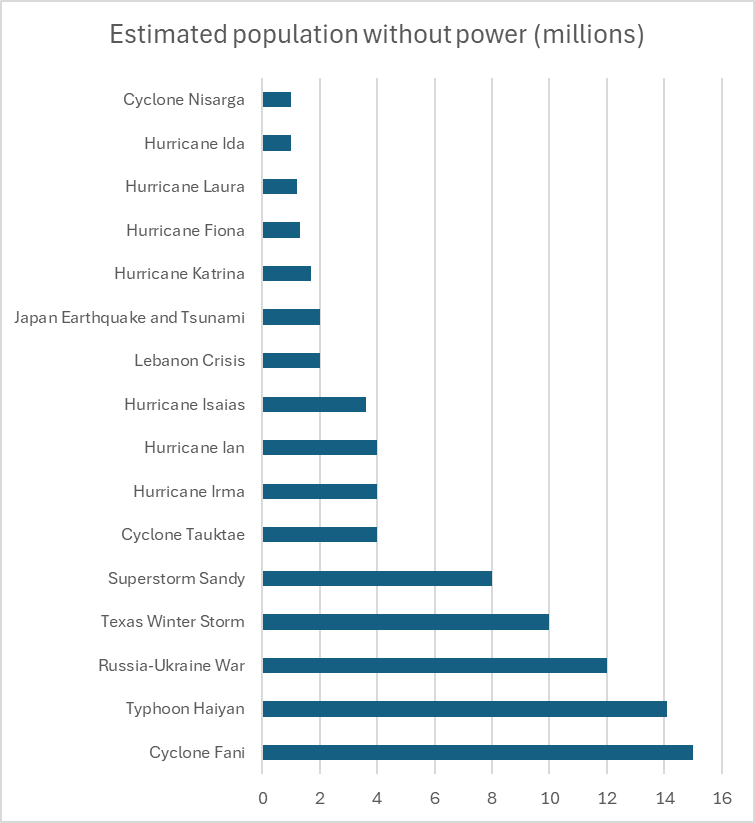
Source: Power grid recovery after natural hazard impact, Restoration of power in the aftermath of disasters
Problem Category:
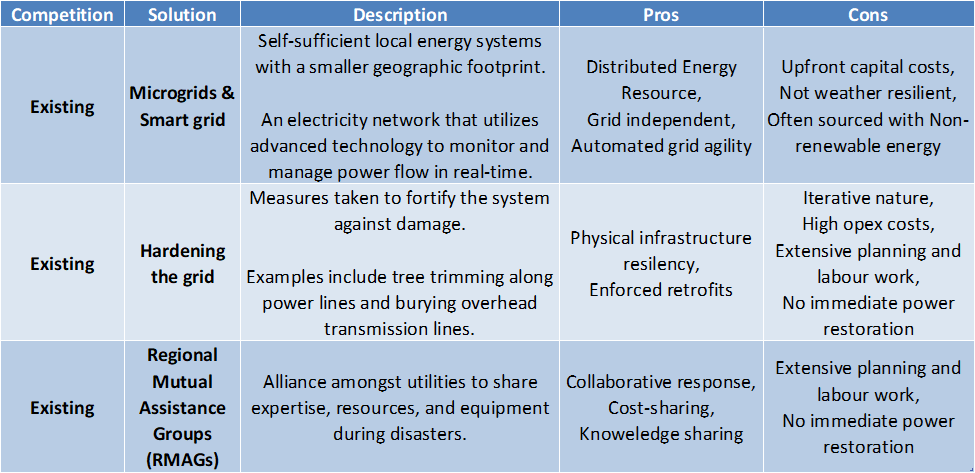
Existing solution/competitors:
Problem validation
Disclaimer: The data presented is based on historical natural disasters and their impact on power restoration, primarily reflecting U.S. events but extrapolated to assess the broader impact for problem validation.
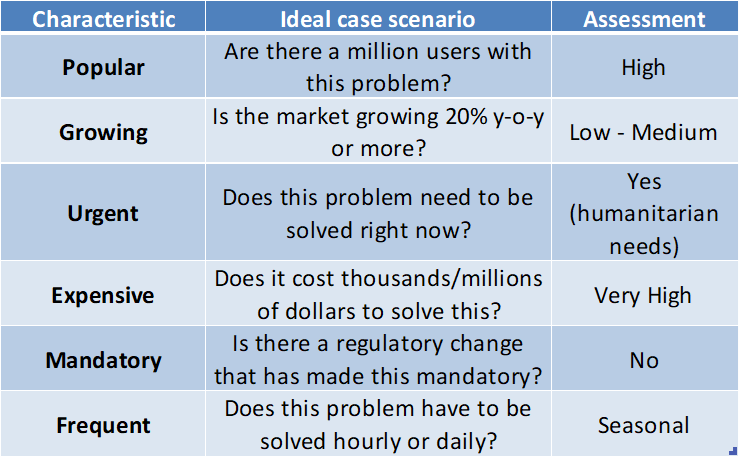
Overall, this is a sensitive, expensive problem with delayed, unreliable solutions that require significant labor force, and the frequency of such disasters is increasing. Enhancing the world’s electrical infrastructure for greater resilience and reliability against disaster will be both expensive and complex.
Adding oil to the fire, The frequency of these events is rising globally, for example of all major U.S. power outages reported from 2000 to 2023, 80% (1,755) were due to weather.
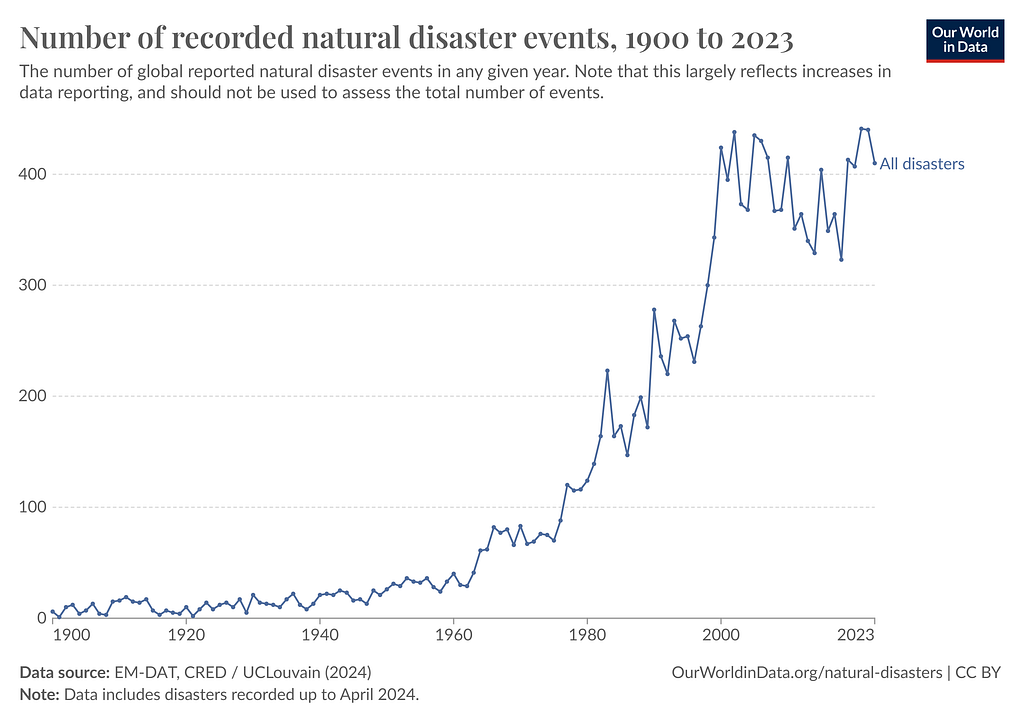
Source: Increase in Natural Disasters on a Global Scale by Ten Times
Final Verdict
The problem validation has proved that this problem is urgent, increasing in frequency due to extreme climate, and expensive to solve. The problem is desireable and viable, the feasiblity will be assessed in-depth as a next step. We can confidently classify this problem as a “Real Problem”. Now, it’s time to explore potential solutions — an area I’m passionate about as an engineer. I think I will set the stage for the goal and scope of the solution.
My primary goal is to achieve rapid, reliable power restoration while minimizing costs and labor, since electric power is quintessential. The value I aim to provide is to restore power immediately for all residents after the disaster. It should be a renewable source of energy so that it does not feed into climate change issues.
One potential solution I’m exploring is a space-based wireless solar power system, which could deliver energy to targeted areas without relying on extensive ground infrastructure. Essentially, a “Starlink for power.” However, deeper exploration and market research for this solution will be addressed another time!
See you in 10 days with a new problem and its validation!