50 days of problem hunting ! Problem 4
50 days of problem hunting !🎯Problem 4
Banking apps fail to proactively guide users with poor financial literacy toward better spending and credit habits, leading to financial vulnerability.
Aim of this activity is to, identify a problem I faced, research about it, and validate the problem. I will solve the problem, only if it is a “Real Problem”.
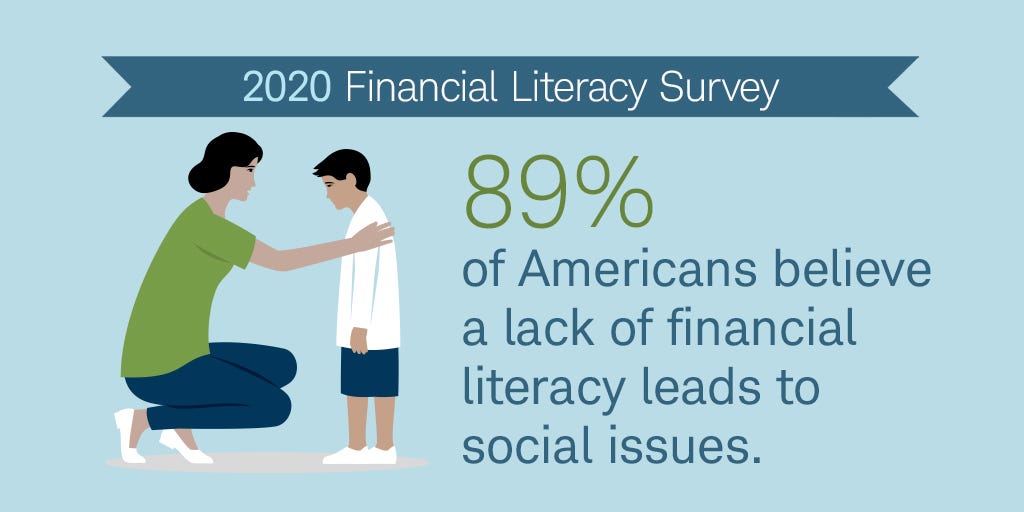
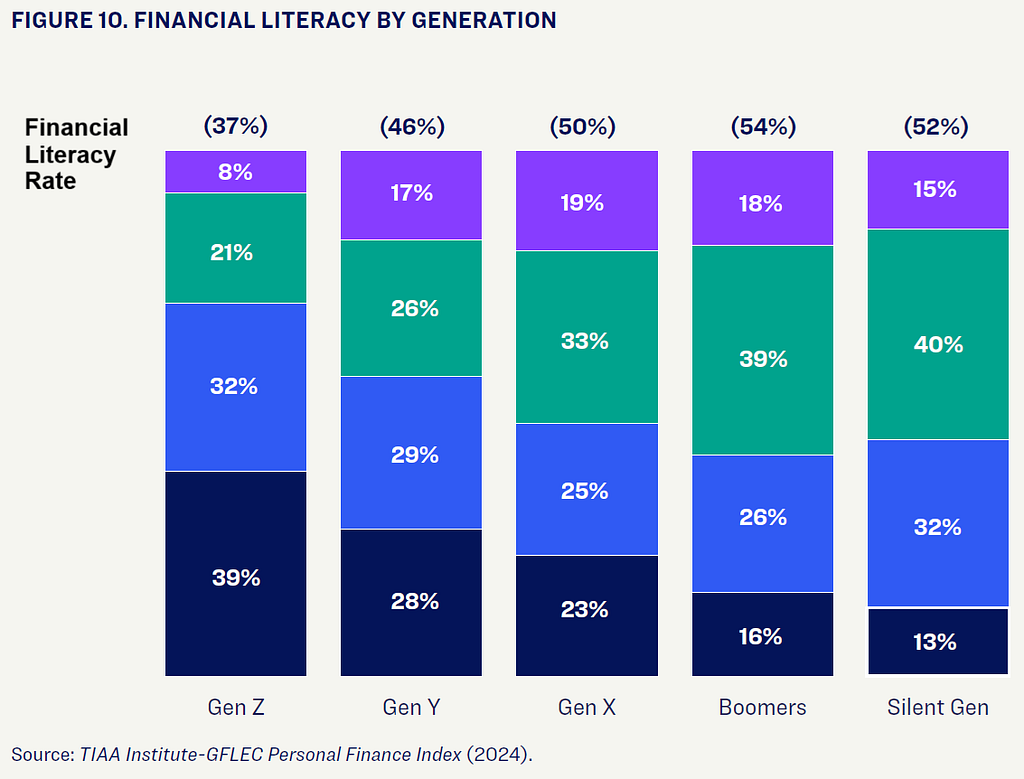
Source: The 2024 TIAA Institute-GFLEC Personal Finance Index
Problem Exploration
Context: The problem occurs monthly for people with low financial literacy who rely on personal finance management.
Background: Many people face difficulties in managing and remembering bill payments, leading to late fees, lower credit scores, and increased financial stress. High levels of financial stress and dissatisfaction with existing tools for financial management, as evidenced by growing interest in fintech solutions, highlight the gap in addressing this problem. 60% of users seek guidance on financial management through their banking apps, indicating a need for better automated financial advice.
Two-thirds of Americans are in financially vulnerable or coping categories. Addressing these challenges is vital for promoting equitable financial opportunities, reducing societal stress, and fostering consumer trust. Banks and fintech companies can leverage this opportunity to enhance customer loyalty and differentiation by prioritizing financial health initiatives.
User backstory story (hypothetical): Emily, a young professional, uses her banking app to monitor expenses, pay bills, and set savings goals. However, she struggles each month to manage multiple accounts, payments, keep utilization rates in check, etc. This leads to stress, late fees, and frustration with the app’s cluttered interface, confusing terms, and lack of useful automation or timely notifications. Like many users, she faces challenges in navigating banking apps that fail to preemptively guide financial habits and increase the risk of poor credit behavior.
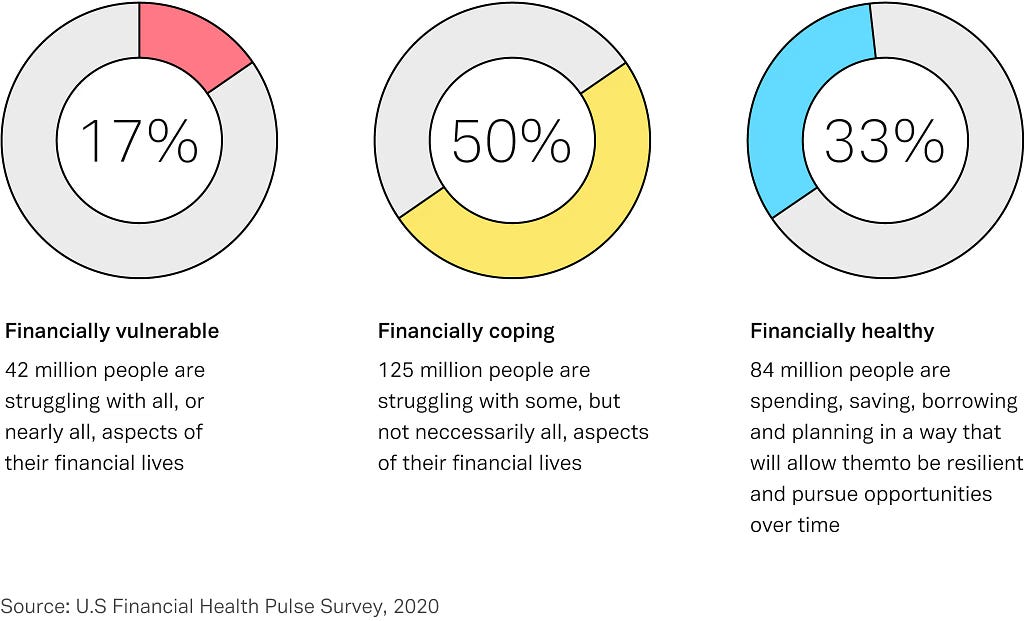
Source: U.S Financial Health Pulse Survey, 2020
What will happen if the problem is unresolved:
- Personal Financial impact: Credit score, late fees, budgeting complexities, higher interest rate, etc.
- Emotional and Psychological Impact: Financial instability leads to heightened anxiety and stress, impacting mental health.
- Business and Global Impact: Reduced productivity and institutions facing reputational damage, loss of trust, and customer attrition.
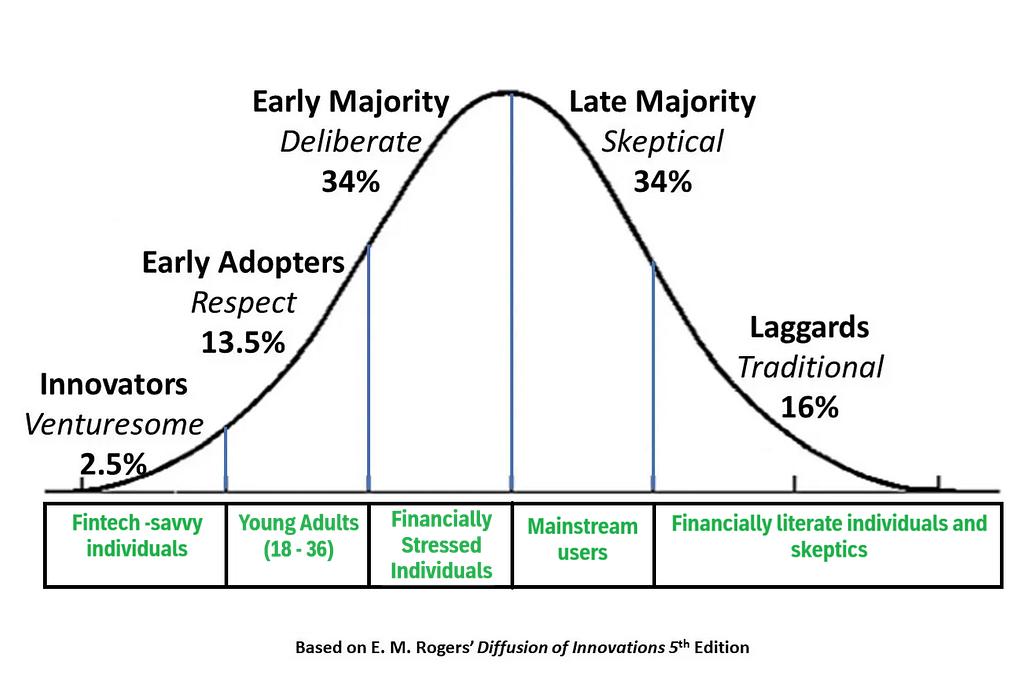
Ideal Client Profile: Individuals relying on financial apps for personal finance management. It includes young adults, low-income households, and people new to financial independence. They can be reached through bank partnerships, mobile applications, and social platforms.
Probable Adoption curve (hypothesis):
Impact:
The lack of simple financial explanations, sensible automation, and personalized smart nudges negatively affects individuals, businesses, and the economy. One in six young adults experience challenges repaying debt burdens. Young adults, often the most vulnerable, are unaware of the long-term impacts of their financial decisions. Here is a high-level assesment of the various impacts:
Mobile Apps: The New Norm for Personal Finance Management
- Gaps in Financial Guidance: While 45% of banking users rely on apps to pay bills, many lack features that actively promote better credit habits.
- Generational Usage: 60% of millennials, 57% of Generation Z and 52% of Generation X primarily use mobile banking apps to manage finances.
- Personalization Deficit: While 58% of users prefer insights tailored to their spending habits, most apps fail to deliver personalized financial guidance.
Rising financial vulnerability among young adults
- Financial vulnerability: 18.7% of Canadians, nearly 4.81 million people, are classified as ‘Extremely Vulnerable’ financially. 75% of Canadians, nearly 19.3 million people, have some level of financial vulnerability.
- Misinformation Impact: The rise of misleading information in financial markets is becoming increasingly prevalent, leading to poor decision-making.
- Information Asymmetry: Younger households face higher lending rates due to shorter and less stable credit histories, indicating a gap in financial knowledge and understanding of complex terms.
Economic and Societal
- Mental health: 50% of young adults say they’ve experienced anxiety, depression, and mental health challenges due to financial stress, compared to 34% of those over 35.
- Barriers to Financial Inclusion: Certain demographics, particularly younger adults or those with limited financial literacy, face systemic exclusion from credit markets. This perpetuates economic disparities.
Problem Category:
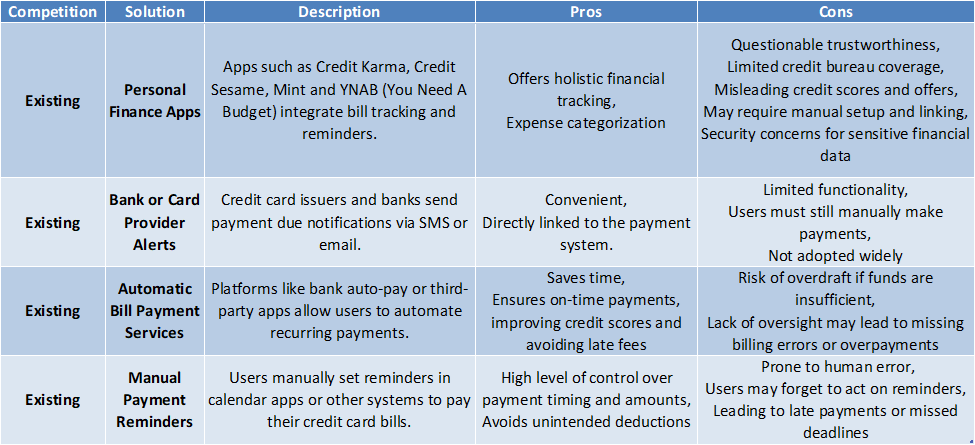
Existing solution/competitors:
Problem validation
Disclaimer: The data presented draws from historical reports on delinquency rates, financial stress indices, and financial vulnerability indices, primarily reflecting U.S. and Canadian statistics but extrapolated to assess the broader impact for problem validation.
These insights emphasize the critical nature of addressing this problem for young adults and setting them up for success in the future with good credit habits. The introduction of solutions like personalized notifications, AI-based credit coaching, and integrated financial literacy platforms could mitigate these risks, benefiting both consumers and the broader financial ecosystem.
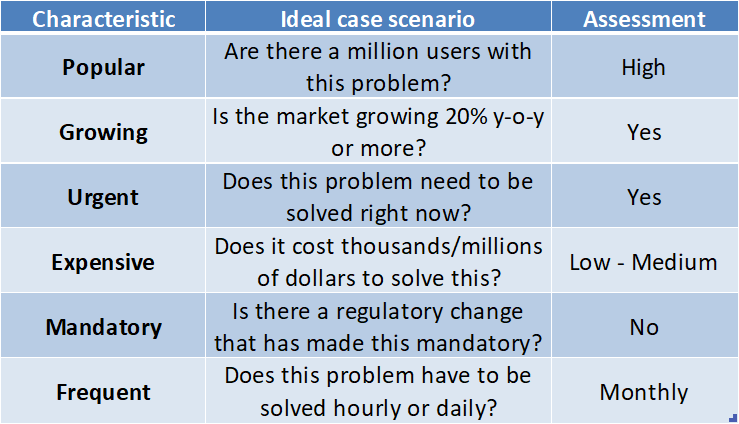
In regards to the market growth, the personal finance apps market is expected to grow from $133.08 billion in 2024 to $330 billion by 2028. The global personal finance apps market is estimated to grow annually at a CAGR of around 23.40% over the forecast period (2024–2032).
Final Verdict
The problem validation has proved that this problem is highly popular, growing with significant financial and social implications. The problem is desirable and viable, the feasibility will be assessed in-depth as a next step. We can confidently classify this problem as a “Real Problem”. Now, it’s time to explore potential solutions — an area I’m passionate about as an engineer. I think I will set the stage for the goal and scope of the solution.
My primary goal is to simplify everyday financial decisions, enable sensible automation (by default), and foster good spending habits. The value I aim to provide is a trusted ally and advocate for financial wellbeing. It should be an assistant that empowers better choices and inspires you to grow your wealth.
See you in 10 days with a new problem and its validation!