The DeepSeek Saga
A Double-Edged Sword in AI Innovation
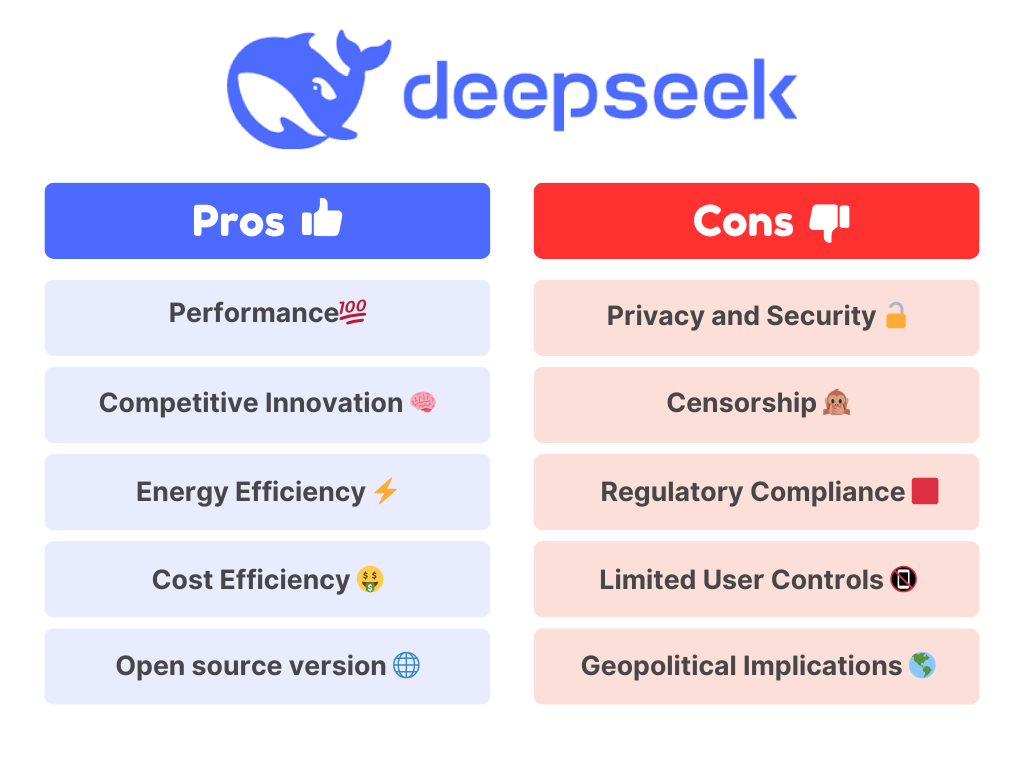
Since DeepSeek’s breakthrough in AI technology late last year, it has sent shockwaves through the tech industry, triggering a global tech selloff and risking $1 trillion in market capitalization. This Chinese AI powerhouse has emerged as a formidable challenger to established players like OpenAI, showcasing impressive innovations and cost-efficiency. Here are my thoughts on key considerations for the DepSeek and the evolving AI market landscape.
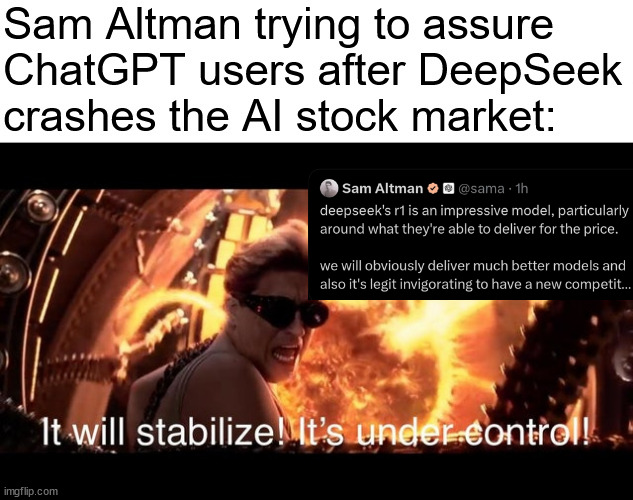

Source: https://longportapp.com/en/news/226369827
The Bright Side: Technological Leaps
DeepSeek’s latest model, DeepSeek-R1, boasts 671 billion parameters, with groundbreaking architectural and algorithmic efficiencies. The company’s innovative approach includes:
- Performance and Competitive Innovation: Higher Accruacy compared with SOTA models, Architecture (MoE + RL + Reasoning), Algorithmic efficiency (Distillation, 8-bit Quantization, 93% comprestion ratio for key-value indices, and Multi-token prediction)
- Energy efficiency: Training and inference efficiency (lower GPU count) leading to lower energy demand and emmisions impact.
- Cost efficiency: Service costs (competitive API offerings — Priced at 1/30th of similar OpenAI models — very lucrative for downstream companies).
- Open source version: You can just rack up several iMacs and run the whole model offline in your house.
The Dark Side: Trust and Security Concerns
Despite these advancements, DeepSeek’s rapid rise raises several red flags for the propietary model:
- Verification challenges: The lack of third-party verification for DeepSeek’s claims about GPU usage and research paper details is concerning.
- Privacy and Security: Questions linger about DeepSeek’s data collection, sharing, ownership, and control policies, especially compared to established players like OpenAI, Grok, and Gemini.
- Censorship: Reports of blatant censorship of Chinese political issues in the proprietary model are troubling.
- Limited user control: The proprietary model offers minimal opt-out features, raising privacy concerns. While the open source model does provide you with complete control to modify the behaviour, the majority of the population are not going to run it local!
- Geopolitical implications: DeepSeek’s Chinese origins and rapid global impact have geopolitical ramifications that cannot be ignored.
The Convenience Trap
Despite the open-source option, most users opt for DeepSeek’s proprietary API or app due to ease of use. Of course, not everyone can and would want to run this locally using 7+ iMacs. This choice, however, funnels user data through servers in China, raising significant privacy concerns. The convenience of a ready-to-use solution often outweighs the complexities of deploying open-source models, inadvertently exposing users to potential data risks they may not fully comprehend.
The Path Forward
As AI technology advances, the need for responsible, trustworthy, and well-governed models becomes increasingly critical. Open-source initiatives, like MIT-licensed models, offer a step in the right direction by allowing for transparency, inspection, and customization. However, the AI industry must remain vigilant. As we’ve seen with DeepSeek, rapid innovation can outpace our ability to verify claims and ensure ethical use. The future of AI lies not just in technological breakthroughs, but in our ability to balance innovation with responsibility, transparency, and global cooperation.
Speaking of strategic path forward, OpenAI’s timely release of ChatGPT Gov couldn’t be more perfectly timed — a direct response to the emerging global AI landscape and government technology needs.
OpenAI launches ChatGPT Gov for U.S. government agencies amid rising AI competition