Problem Validation Guide
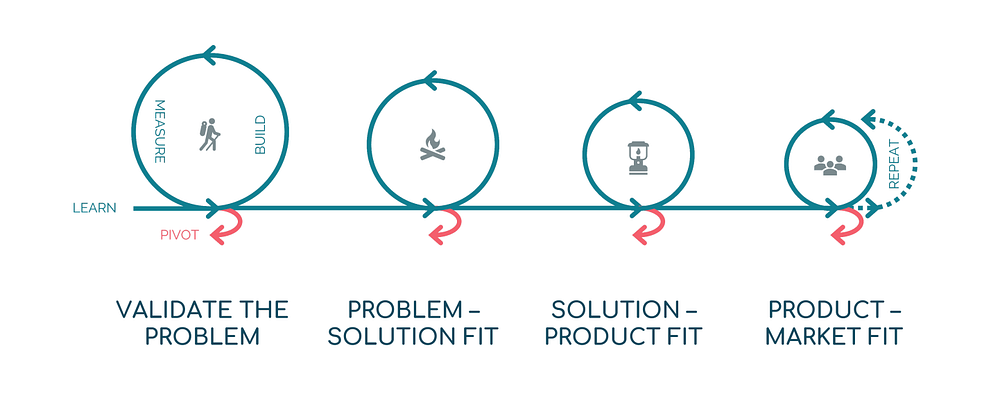
The goal of this guide is simple: identify a problem, investigate it, and validate whether it truly exists. Essentially it is an exercise in hypothesis building and testing. You’ll start by framing a clear problem statement and hypothesis, then move through research and data-driven reasoning to build a compelling problem validation story. By the end of this journey, you’ll have the clarity to determine if the problem is genuinely meaningful and remember — only pursue solving the problem if it’s a Real Problem.
If you think about it, problem validation is like pursuing a Ph.D. You begin with an assumption or hypothesis and work diligently to prove or disprove it. The outcome — whether validated or invalidated — is secondary to the process of rigorous research and due diligence.
Here’s the key takeaway: Invalidated or failed assumptions are as valuable as validated ones. They provide deep insights into the problem, the market, and the target audience. Much like research papers, the validity of your prior hypothesis is less important than the learning process. Each step teaches you more about the problem landscape and brings you closer to clarity.
Once all the data is collected, and peer reviews (if applicable) are complete, you’ll have a well-rounded understanding of whether the problem is valid, desirable, viable, and feasible to solve. An innovator should have understanding of one’s customers and their problems via empirical, observational, anecdotal methods or even intuition.
Problem validation cannot be read as theory. It must be practiced because you cannot learn how to talk to customers by reading about it. You have to gain experience in asking the right customers, the right questions.
Practice Over Theory, Problem validation isn’t something you can learn through theory alone. It requires practice because you can’t master talking to customers by reading about it. You need to experience asking the right customers the right questions.
The insights and frameworks shared in this article are a culmination of my own readings, experiences, and experiments. I hope they inspire and guide you in your journey of problem validation. Remember, it’s not about being “right”, it’s about learning.
Problem Exploration
To embark on the problem validation and exploration journey, follow these steps to gather insights and articulate your findings effectively. Dive into research — through the internet, customer interviews, surveys, and other credible sources — and document your observations. Use the guidance below to structure your journey and focus on uncovering key insights at every stage.
Problem Statement
Describe the problem in three clear, concise lines that answer these key questions:
- What is the problem? Clearly define the issue or challenge.
- Who does it affect? Specify the individuals or groups most impacted.
- Why does it affect them? Explain the underlying reasons or circumstances causing the problem.
Example: “Frequent bus schedule inaccuracies cause delays for urban commuters, leading to wasted time and frustration. This issue disproportionately affects daily riders who rely on public transit for punctuality in their work and personal commitments.”
Background
Provide investors with a detailed overview of the issue, its impact, and the pain points for the target audience. Use the guiding questions below to craft a compelling narrative that connects the audience to the problem and highlights its significance.
- What’s the evidence of the problem? Share data, customer feedback, or examples that confirm the issue exists. Provide concrete data — percentages, reports, or case studies — that quantify the problem.
- Who is affected? Identify the primary user or customer segments. Be specific — mention demographics, geographies, or industries. Situate the problem within its industry. Is it unique to a specific sector, or does it cross multiple domains?
- What’s the Impact on Customers? Explain the core challenges it creates for the affected users. What limitations, frustrations, or negative impacts does it cause? Detail how the problem disrupts their lives or operations. Use vivid descriptions and measurable impacts like lost time, money, or opportunities.
- How many are affected? Estimate the scale of the problem. Use statistics or examples to show how widespread the issue is.
- What’s the Origin and Occurrence? Describe how and when the problem started, and explain its frequency — does it happen daily, seasonally, or under specific conditions?
- Why does it matter? Explain why solving this problem is crucial for users and stakeholders. Tie it to their implicit (unspoken) needs and explicit (stated) desires.
User backstory story
A compelling user backstory helps investors to understand affected customer segments and how it impacts their lives. Use the following guide to paint a relatable and vivid picture of your target user:
- Customer Persona: Assign a relatable name to the user.
- Role/Segment/Industry: Define the user’s role and the industry they represent.
- First Encounter with the Problem: Describe how the user initially becomes aware of the issue. Is it through their daily routine, a specific event, or recurring frustrations?
- Facing the Problem: Explain the specific ways the problem disrupts their life, work, or goals.
- Current Solution: Outline how the user currently addresses the problem. Are they using a workaround, a suboptimal solution, or simply enduring the issue?
- Pain Points and Impact: Highlight the primary pain points and their consequences. How do these frustrations affect the user’s efficiency, finances, emotions, or overall experience?
Ideal Client Profile
Use the Jobs To Be Done framework to pinpoint the market segment that will derive the most value, ensuring alignment with their needs and motivations.
- Who Are the Ideal Clients? Define the target market or customer segment most likely to benefit from the solution. Use collective terms to describe them (e.g., “urban commuters,” “small business owners,” or “health-conscious professionals”).
- Economic Decision Maker vs. End User: Differentiate between the customer who makes purchasing decisions (economic decision maker) and the end user who directly interacts with the solution.
- Key Stakeholders and Sponsors: Identify individuals or groups who have a vested interest in solving the problem. Highlight their key interests, such as cost savings, efficiency, or customer satisfaction. Assess their current commitment levels — are they highly motivated, neutral, or resistant to change?
- Customer Geographics: Pinpoint relevant locations or regions where the solution is needed most.
- Customer Demographics: Describe the age, income level, occupation, or other defining traits of the target audience.
- Customer Psychographics: Explore the values, behaviors, and motivations driving the customer segment.
- Engagement Strategies: Determine how to effectively engage and reach the ideal clients: Leverage social media, email marketing, or targeted ads. Partner with industry organizations or influencers. Use case studies, testimonials, or free trials to demonstrate value.
Assumptions
Clearly state the assumptions and beliefs that form the foundation of your hypothesis, connecting them to both the problem and the ideal client profile. These assumptions act as the starting point for problem validation and guide your research and exploration efforts.
What will happen if the problem is unresolved
If the problem remains unaddressed, describe the aftermath that the customer will continue to face. Below are the potential consequences:
- Financial Impact: Increased costs due to inefficiencies, lost productivity, or reliance on expensive alternative solutions.
- Global Implications: Broader effects such as reduced industry growth, strained resources, or negative environmental impacts.
- Emotional Toll: Frustration, anxiety, and dissatisfaction, leading to reduced quality of life or workplace morale.
- Physical Strain: Potential health-related consequences, such as fatigue or stress, resulting from the problem’s recurring nature.
- Operational Challenges: Ongoing inefficiencies, reduced effectiveness, or failure to meet goals, impacting the user’s ability to thrive personally or professionally.
- Missed Opportunities: Inability to capitalize on potential growth, innovation, or better outcomes due to persistent obstacles.
Probable Adoption curve
Understanding how different customer segments adopt a solution is crucial for developing a targeted go-to-market strategy. Using the Diffusion of Innovation Theory, hypothesize which segments of your target market fall into each adoption category:
- Describe possible customer segments as Innovators (2.5%), Early Adopters (13.5%), Early Majority (34%), Late Majority (34%), and Laggards (16%).
Impact of the problem — deep dive on market research
Examine the problem’s impact in detail using data and insights from trusted and reputable sources. Present the findings, supported by logical reasoning and evidence, to paint a clear picture of the problem’s magnitude and urgency.
- Financial Impact: Quantify the economic losses caused by the problem, e.g., revenue loss, increased operational costs, or reduced productivity. Reasoning, Inefficiencies directly translate to financial losses, particularly in industries reliant on precise processes.
- Operational Impact: Highlight how the problem affects workflows, efficiency, or outcomes. Reasoning, Disruptions in routine operations cascade into missed deadlines and strained resources.
- Emotional and Psychological Impact: Discuss how the problem contributes to stress, dissatisfaction, or frustration for customers and stakeholders. Reasoning, Repeated exposure to unresolved issues erodes confidence and well-being.
- Market/Industry-Level Impact: Provide insights on how the problem affects the broader industry or market dynamics. Reasoning, Persistent issues stall innovation, create inefficiencies, and deter new entrants.
- Environmental or Societal Impact: Explore the environmental or societal consequences of the problem. Reasoning: Ignoring systemic issues exacerbates resource consumption and environmental degradation.
- Market Research Findings: Use surveys, industry reports, and academic studies to estimate the number of affected customers or organizations. Growth Trends, Identify if the problem is escalating, driven by factors like technological shifts, market demands, or population growth.
Preparation for Next Sections
- Risks: Detail risks associated with solving or not solving the problem, using insights from market research to evaluate the stakes.
- Problem Categories: Categorize the problem into types (e.g., financial, operational, societal) to highlight its multi-faceted impact.
- Existing Solutions/Competitors: Identify current market players, solutions, and gaps that your offering could address.
Risks
When validating a problem, identifying associated risks and constraints is crucial. This step ensures that you understand potential hindrances to implementing a solution and can proactively address them. By systematically analyzing these areas, you can gain clarity on the challenges ahead and create a roadmap to mitigate them effectively.
- Knowledge Gaps: What do we not know about the problem, trend, or industry? Missing insights can stall progress and lead to flawed assumptions.
- Failure Scenarios: What could go wrong? Consider technical, operational, and market-related risks that might derail your solution.
- Risk Impact: What are the potential consequences of these risks? Assess both the short-term and long-term effects on your project or stakeholders.
- Dependencies: What are the current and future dependencies for this problem? Identify external factors, such as regulatory changes or evolving customer needs, that could affect your solution’s viability.
Problem category
Classifying your problem helps you understand its nature and prioritize it effectively. Use these six characteristics to evaluate your problem, and rank them based on the potential impact on your target audience or business.
- Popular (Are there a million users with this problem?)
- Growing (Is the market growing at 20% or more year-over-year?)
- Urgent (Does this problem need to be solved immediately?)
- Expensive (Does it cost thousands/millions of dollars to solve it?)
- Mandatory (Is there a regulatory change that has made this mandatory?)
- Frequent (How often does this problem occur — hourly, daily, or seasonally?)
Existing solutions/competition
Understanding the existing solutions and competitors is critical in validating your problem and identifying opportunities for differentiation. This analysis helps you uncover gaps, trends, and lessons learned from past attempts to solve the problem.
- Current Market State: Assess the present state of the market. Are there many solutions, or is it under-served? Evaluate their pros (e.g., effectiveness, affordability, ease of use) and cons (e.g., high cost, complexity, limited scalability).
- Competitors: Identify key players offering solutions for the problem. Assess their strengths (e.g., market dominance, innovative features) and weaknesses (e.g., lack of customization, limited adoption). Classify them as Direct, Indirect, or Alternative competitors.
- Past Efforts: What has been tried before, and what were the results? Understanding failures and successes provides valuable insights.
- Future Trends: What are the expected developments or disruptions in this space?
Problem validation
Problem validation is the culmination of all the research, data, and insights gathered throughout the process. It’s your opportunity to articulate why the problem is both important and impactful.
Based on the information collected:
- Restate the problem in clear and concise terms.
- Highlight key findings, such as its urgency, prevalence, or high cost of inaction.
- Emphasize how solving this problem aligns with market needs, user pain points, and industry trends.
Why This Problem Matters:
- Impact Potential: Describe how addressing the problem could significantly benefit users or stakeholders.
- Scope for Action: Is there an opportunity to avoid, mitigate, prevent, reduce, minimize, or eliminate the problem? For instance, could a new solution save time, lower costs, or improve user experiences?
Outcomes
Describe what measures the real value delivered through any possible solution. What outcomes are meaningful to solve the problem? What are you hoping to accomplish and solve?
Defining the outcomes of solving a problem is critical to measuring the real value your solution delivers. Clear and meaningful outcomes provide direction, help validate the effectiveness of your solution, and ensure alignment with the needs of your target audience.
Key Questions to Address:
- What is the Real Value Delivered? Identify tangible and intangible benefits for users, such as time savings, cost reductions, improved convenience, or peace of mind.
- What Outcomes are Meaningful? Focus on outcomes that directly address the core pain points of the problem and create measurable improvements.
- What Do You Hope to Accomplish? Specify what success looks like — whether it’s solving the problem entirely, mitigating its impact, or improving processes associated with it.
Final Verdict
The final step in problem validation is determining whether the identified problem is a “real” and meaningful challenge worth solving. This decision should be based on logic, data, and the insights collected throughout the validation process.
Evaluating the Problem
- Desirable: Does this problem resonate strongly with the target audience? Are users willing to pay for or adopt a solution?
- Viable: Can solving this problem create a sustainable business model and an impactful project? Is there a clear market opportunity with sufficient demand?
- Feasible: Is it technically, financially, legally, and operationally feasible to build a solution? Do the resources and expertise required align with your capabilities?
If the problem is validated as desirable, viable, and feasible, it can be classified as a “real” and impactful problem. Move forward with refining the solution and planning the next steps. If the problem is not validated as real, valid, or impactful, consider optimistic pivots:
- Reframe the Problem Statement: Focus on a narrower or adjacent aspect of the problem.
- Explore a New Target Segment: Identify a different audience where the problem might resonate more strongly.
- Shift Market or Industry Assumptions: Investigate emerging trends or untapped markets that could present opportunities.
Pivot or Persevere
Use tools like the validation board or the pivot-or-persevere framework to document your learnings and actions:
- Pivot: Change one or more core assumptions and reframe your approach.
- Persevere: Continue validating and refining the problem with additional research or feedback. Move on to the next stage, by actually solving the problem!
Good resources for more information:
- https://www.teachingentrepreneurship.org/intro-problem-validation/
- https://www.teachingentrepreneurship.org/teaching-problem-validation/
- https://hbr.org/2011/08/henry-ford-never-said-the-fast
- https://www.leanfoundry.com/tools/lean-canvas
- https://www.strategyzer.com/library/the-value-proposition-canvas
- https://www.ohblimey.com/blog/how-to-validate-your-startups-idea-how-to-stop-delusional-thinking-kicking-in
- https://medium.com/@steve_mullen/an-introduction-to-lean-canvas-5c17c469d3e0
- https://www.kickframe.com/frameworks/2021/4/29/pivot-or-persevere-meeting
- https://www.linkedin.com/advice/1/how-do-you-decide-when-pivot-persevere-your-product#:~:text=2-,2%20The%20pivot%20or%20persevere%20framework,have%20learned%20from%20your%20MVP.
- https://www.linkedin.com/advice/0/how-do-you-pivot-persevere-based-your-market-validation#:~:text=Pivoting%20means%20changing%20one%20or,and%20refining%20or%20optimizing%20it.